



For the nth time, the government has once again introduced a new form of lockdown status under the general community quarantine (GCQ) classification: the GCQ “with some restrictions”.
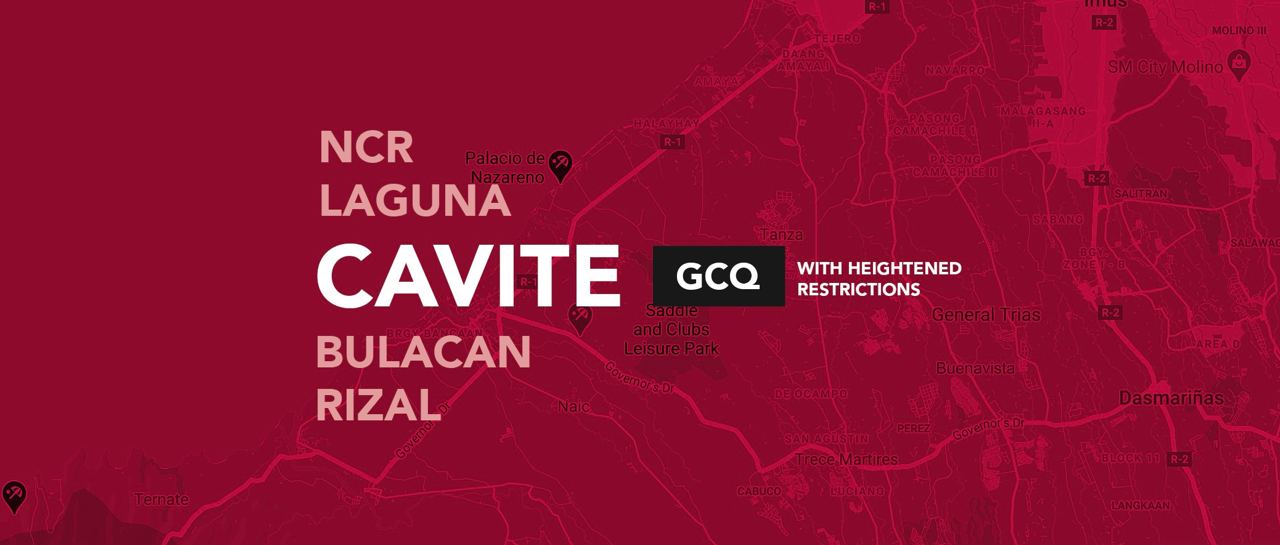
It is the quarantine level for Metro Manila and Bulacan from June 16 to 30, while GCQ “with heightened restrictions” has been placed for Cavite, Rizal, and Laguna.
(READ: Cavite under GCQ ‘with heightened restrictions’ by June 16)
Meanwhile, other areas were put under the regular GCQ, modified GCQ, or modified enhanced community quarantine (MECQ).
What do these three types of GCQ mean and how do they differ from one another? Here are the specific guidelines according to the Malacañang.
Interzonal travel
All types of GCQ – Not allowed, except for work, emergencies, or accessing essential goods and services
Mobility
All types of GCQ – Persons below 18 years old and over 65 years old should stay at home, except for work, emergencies, or accessing essential goods and services.
Fully-vaccinated seniors, however, are allowed to roam freely with their vaccination cards.
(READ: IATF allows fully-vaccinated senior citizens in GCQ, MGCQ areas to go out)
Indoor dining in restaurants
GCQ with heightened restrictions – Up to 20% capacity allowed but may increase by 10% with Safety Seal
GCQ with some restrictions – Up to 40% capacity allowed but may increase by 10% with Safety Seal
GCQ – Up to 50% capacity allowed
Outdoor dining in restaurants
GCQ with heightened restrictions – Up to 50% capacity allowed
GCQ with some restrictions – Up to 50% capacity allowed
GCQ – Allowed
Indoor sports, gyms
GCQ with heightened restrictions – Not allowed
GCQ with some restrictions – Up to 20% capacity allowed for gyms and fitness but may increase by 10% with Safety Seal. Other indoor sports courts allowed at 30% capacity.
GCQ – Up to 50% capacity allowed
Outdoor sports
All types of GCQ – Only non-contact sports allowed
Indoor visitor or tourist attractions
GCQ with heightened restrictions – Not allowed
GCQ with some restrictions – Up to 30% venue capacity allowed but may increase by 10% with Safety Seal. Guided tours still prohibited.
GCQ – Up to 50% capacity allowed
Outdoor visitor or tourist attractions
GCQ with heightened restrictions – Up to 30% capacity allowed
GCQ with some restrictions – Up to 50% capacity allowed
GCQ – Up to 50% capacity allowed
Meetings, incentives, conferences, exhibitions
GCQ with heightened restrictions – Not allowed
GCQ with some restrictions – Up to 30% capacity allowed except for social events in which only 10% of venue capacity allowed. Safety Seal increases allowed capacity by 10%.
GCQ – Up to 50% capacity allowed
Personal care services
GCQ with heightened restrictions – Up to 30% capacity allowed but for services not requiring mask removal but may increase by 10% with Safety Seal.
GCQ with some restrictions – Up to 50% capacity allowed for services not requiring mask removal but may increase by 10% with Safety Seal.
GCQ – Up to 50% capacity allowed
Religious activities, wake services, weddings
GCQ with heightened restrictions – 10% of capacity allowed but local governments can allow up to 30%
GCQ with some restrictions – 30% of capacity allowed but local governments can allow up to 50%
GCQ – 30% of capacity allowed but local governments can allow up to 50%
Staycation
GCQ with heightened restrictions – Hotels with Certificates of Authority to Operate for Staycations allowed 100% capacity, other government-accredited hotels allowed 30% capacity, with local government oversight
GCQ with some restrictions – Hotels with Certificates of Authority to Operate for Staycations allowed 100% capacity, other government-accredited hotels allowed 30% capacity, with local government oversight
GCQ – Allowed